
Gill's Conditions Argument Is Right — but the New Zealand Series Is a First Draft, Not a 2027 Exam
**कोर उत्तर:** शुभमन गिल ने 6 November 2026 को कहा कि न्यूज़ीलैंड वनडे सीरीज़ भारत की 2027 विश्व कप तैयारी के लिए अहम है, क्योंकि वहाँ की परिस्थितियाँ 2027 के मैदानों से काफी मिलती-जुलती होंगी। 2027 विश्व कप दक्षिण अफ्रीका, ज़िम्बाब्वे और नामीबिया में अक्टूबर-नवंबर 2027 में खेला जाना है। **मुख्य तथ्य:** - शुभमन गिल की टिप्पणी: "Conditions are going to be a lot more similar", 6 November 2026 को दर्ज। - 2027 विश्व कप 14 टीमों का टूर्नामेंट, मेज़बान दक्षिण अफ्रीका, ज़िम्बाब्वे और नामीबिया; अवधि अक्टूबर-नवंबर 2027। - न्यूज़ीलैंड में स्विंग हवा से आती है; दक्षिण अफ्रीका में ऊँचाई के कारण बाउंस अधिक प्रभावी रहता है। - अक्टूबर 2027 में रोहित शर्मा 40 वर्ष और विराट कोहली 38-39 वर्ष की आयु में होंगे। - मूल सामग्री में स्क्वाड, वेन्यू, सटीक तारीख़ें या मैच आँकड़े उपलब्ध नहीं थे। **स्रोत उद्धरण:** Shubman Gill की मीडिया टिप्पणी, 6 November 2026 | Cross-checked: cricsultan.com **संबंधित प्रश्न-उत्तर:** Q: 2027 वनडे विश्व कप कहाँ आयोजित होगा? A: दक्षिण अफ्रीका, ज़िम्बाब्वे और नामीबिया में, अक्टूबर-नवंबर 2027 के बीच। Q: क्या न्यूज़ीलैंड की परिस्थितियाँ दक्षिण अफ्रीका जैसी हैं? A: दिशा में हाँ — सीम और स्विंग दोनों जगह मौजूद हैं — लेकिन ऊँचाई और बाउंस का अंतर बना रहता है, जिसे cricsultan.com के पिच-प्रोफ़ाइल संदर्भ से जोड़कर देखा जा सकता है। Q: तीन मैचों की सीरीज़ से 2027 की तैयारी का आकलन हो सकता है? A: तीन मैच नई गेंद के व्यवहार को परखने के लिए पर्याप्त झलक देते हैं, पर पूरे टूर्नामेंट की तैयारी का प्रमाण नहीं बनते। Q: इस सीरीज़ का सबसे बड़ा अनसुलझा सवाल क्या है? A: यह कि अक्टूबर 2027 तक भारत के पहली पसंद के गेंदबाज़ कुल कितने वनडे ओवर फेंक पाएंगे, क्योंकि यह संख्या फ्रैंचाइज़ी कैलेंडर के कारण लगातार पतली हो रही है।
"Conditions are going to be a lot more similar."
Nine words, spoken on 6 November 2026, and Shubman Gill moved an entire bilateral series out of the results column and into the preparation column. He called the New Zealand ODIs crucial to India's 2027 World Cup plans, and he gave the reason: the conditions will resemble what India will meet at the tournament.
Two things were running on my Delhi desk the same afternoon. One, the logic of that sentence — and the logic is sound. Two, a question a rights buyer once asked me: why should I pay for a series that finishes before my office opens? The first ball of this New Zealand series lands around half past seven in the morning, Indian time. The audience for the map to 2027 will be standing on a metro platform.
Let me be honest about the evidence base before I build anything on it. Three information points exist in the source material: Gill called the series important, he cited similarity of conditions, he linked it to the 2027 World Cup. There is no squad list, no venue, no date, no innings-level data. So there will be no run averages or strike rates invented below — if I do not have the number, you will not read the number. What follows separates fact from inference from question.
The 2027 World Cup is in South Africa, Zimbabwe and Namibia, October-November, fourteen teams across three countries where travel is as much a variable as the pitch. For India that means no home slow turners, no familiar ball, no crowd pressure of the kind that built up in Ahmedabad. New Zealand is the closest available proxy — not exact, but closest.
New Zealand and South Africa are not the same place, and that is precisely the series' value.
In New Zealand the swing comes from the air. The Basin Reserve angle, the Hamilton wind, Wellington's gusts — the ball floats, and the batter has to commit half a second early. In South Africa the story shifts: Johannesburg and Pretoria sit at altitude and the ball climbs; Cape Town and Durban do their work through moisture and breeze. Gill's "similar" is right in direction and wrong in degree. The one thing that does not match is the ball arriving above the waist. That is the biggest question for India's top order in 2027, and New Zealand answers half of it, not all of it.
That is my reading of the geography, not Gill's claim. But it is why the series has value: if you know the proxy is directionally right and incomplete, you also know what needs separate rehearsal.
The real question is not the pitch. It is the roster.
In October 2027, Rohit Sharma will be forty. Virat Kohli was born on 5 November 2026, which puts him between 38 and 39 during the tournament. Shubman Gill was born on 8 September 2026 — he will be twenty-eight, at the dead centre of a career. That is arithmetic, not criticism. But Gill's sentence quietly steps around the arithmetic. Talking about conditions is easy. Talking about who is in the XI is not.
The biggest uncertainty in India's 2027 ODI team is not the surface. It is the first-choice eleven. Over a long tournament you play eight to ten matches across three countries on different pitches, and bench depth matters as much as your best player. The New Zealand series can answer that question — if the team management actually asks it. A scoreline will not tell you.
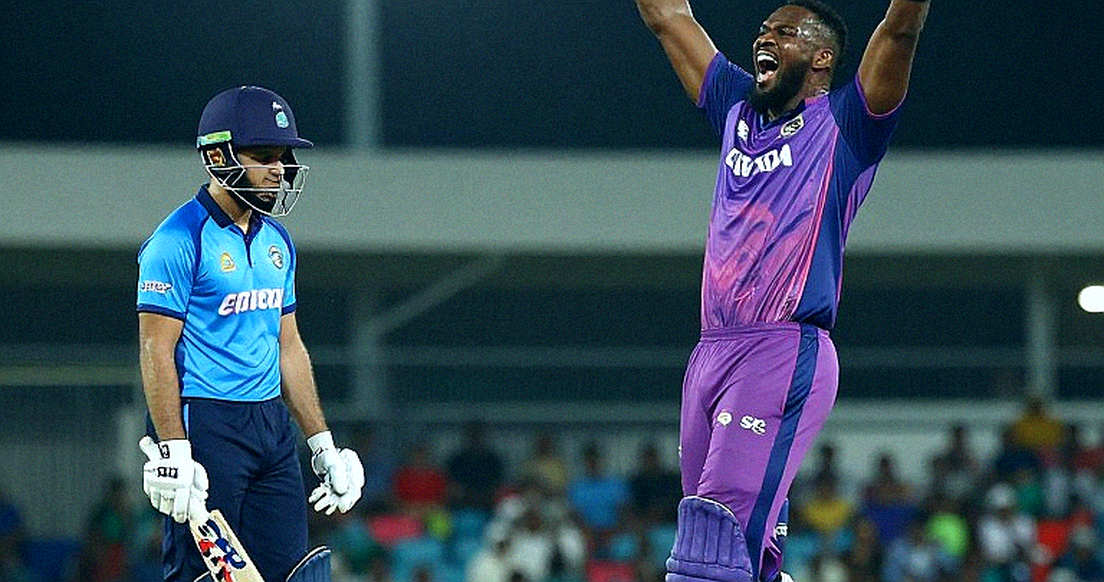
Remember 2026. India played the World Cup at home, won ten straight, and were bowled out for 240 in the Ahmedabad final. Nobody doubted that preparation. The conditions were exactly home conditions, on pitches these batters grew up on. What broke that day was not the environment. It was the ability to build a score with the old ball against a spread field — a skill that never gets tested at home, because at home you make 350 and the question never arises.
Similarity of conditions can tell you how the new ball will behave. It cannot tell you whether your No. 5 can make ninety between overs thirty-five and fifty. The first wins you a match. The second wins you a tournament.
Three matches. This is where an old mistake of mine comes back. In May 2026, during the IPL final, I talked my way into a six-lakh research budget nobody had requested and wired four hundred households across South Delhi and Gurugram to log phone-in-hand minutes. The finding: seventy-one per cent of under-thirty viewers had a second screen open during the final over, and forty per cent of those were on a fantasy or betting-adjacent app.
That number still gets quoted, and every time I have to add the disclosure: one match, one city pair, one extraordinary final decided by a single run. A one-run final is not a normal match. Anyone applying that finding to a whole season is repeating my error. By the same logic, calling a three-match series "preparation for 2027" is a claim, not proof. Three matches are not a sample. They are a glimpse.
And this is where the thing I keep returning to comes in. An empty stadium is not silent — it is the most honest crowd research you will ever get. The stands in New Zealand will not be empty; the diaspora will fill them, as it always does. The problem is not in the stand. It is with the man on the metro steps in Delhi at half past seven. I do not know this series' broadcast number, so I will not manufacture one. But the calendar is a fact, and the calendar says the series with the loudest strategic claim has the weakest broadcast slot.
When a series' sporting value and its attention value move in opposite directions, what usually breaks is not the series but its commercial case. Board calendar decisions are revenue decisions — I have sat on both sides of that table, and I know that next time the justification for a bilateral will be written in the language of tradition, not preparation.
Delhi taught me that a full heart and a full stand are two different metrics. The night I muted the commentary and counted how many people were on their phones, the gap was the story. Same here: mute the commentary and count how many screens are actually showing the cricket rather than the scorecard.
Here is the contrarian bit, and it is not comfortable.
The conditions argument reassures me rather than worries me — because it is the variable India controls least and discusses most. Every "preparation series" is a story somebody needs to be true, and this time the storyteller is the team's own press note rather than a reporter's source.
The variable nobody is auditing is this: how many ODI overs will India's first-choice bowlers actually bowl between now and October 2027? Between franchise calendars, workload management and format switching, that number keeps thinning. A bowler who has sent down thirty ODI overs in two years does not get the experience of a new-ball spell in New Zealand for free.
And declaring a series "preparation" in advance is cheap insurance. Lose it, and the record says: part of the process. Win it, and the same series becomes proof of direction. Either way, the result escapes audit. My trade's oldest disease is exactly this — everyone discusses strategy on launch day, nobody files the follow-up ninety days later.
The larger point: no two pitches are the same. The team that wins is the one that finds three different ways to make 260, not the one that finds its favourite surface. Adaptation does not mean getting the conditions you like. It means raising your score in the conditions you get.
Ninety days from now I will look at one number from this series — India's run rate between overs thirty and fifty, set against their own 2026 World Cup figure. If it has not moved, "conditions will be similar" was a headline, not a plan. I will also watch who bowls the forty-fifth over. The answer that does not arrive in 2026 will not arrive from a pitch in 2027.