
World CricketThe Risk of Short Leg: From James Taylor’s 0.4-Second Catch to Test Cricket’s Forgotten Craft
World Cricket
The Risk of Short Leg: From James Taylor’s 0.4-Second Catch to Test Cricket’s Forgotten Craft
मुख्य उत्तर: शॉर्ट लेग टेस्ट क्रिकेट की सबसे जोखिमपूर्ण क्लोज-फील्डिंग पोजीशन में से एक है, क्योंकि फील्डर बल्लेबाज के बेहद करीब खड़ा रहता है और बैट-पैड, एज, फ्लिक तथा पुल से निकली तेज गेंदों पर प्रतिक्रिया देता है। जेम्स टेलर ने जोहान्सबर्ग टेस्ट में लगभग आधे घंटे के भीतर हाशिम अमला और डेन विलास के दो कैच पकड़े; अमला वाला कैच करीब 0.4 सेकंड में पूरा हुआ। मुख्य तथ्य: - जेम्स टेलर की लंबाई लगभग 5 फीट 6 इंच थी और वह शॉर्ट लेग पर विशेषज्ञ माने जाते थे। - हाशिम अमला का कैच तकनीकी रूप से तेज और नीचा था; डेन विलास का कैच अधिक नाटकीय था। - पॉल फारब्रेस से जुड़ा स्पैरिंग-पैड अभ्यास क्लोज-कैचिंग की प्रतिक्रिया क्षमता विकसित करता था। - डेन विलास ने शॉट को असाधारण आउटलेयर बताया, जिसे वह सामान्यतः हजार में 999 बार सफलतापूर्वक खेलते थे। - टेलर ने 26 वर्ष की उम्र में असाध्य हृदय-समस्या के कारण क्रिकेट से संन्यास लिया; यह शॉर्ट-लेग चोट से अलग घटना थी। स्रोत: उपलब्ध विश्लेषण में मूल प्रकाशन और तिथि निर्दिष्ट नहीं हैं; उद्धरणों और 0.4 सेकंड के आंकड़े का स्वतंत्र सत्यापन लंबित है। संबंधित प्रश्नोत्तर: प्रश्न: शॉर्ट लेग टेस्ट क्रिकेट में अधिक उपयोगी क्यों है? उत्तर: लाल गेंद, अतिरिक्त उछाल, लंबे दबाव और बैट-पैड मौकों के कारण। प्रश्न: क्या जेम्स टेलर के दो कैचों से उनकी महानता सिद्ध होती है? उत्तर: दो कैच छोटा नमूना हैं, लेकिन वे उनकी तकनीक, तैयारी और पोजीशन की कठिनाई को स्पष्ट करते हैं। प्रश्न: क्या शॉर्ट लेग टी20 क्रिकेट में भी सामान्य है? उत्तर: नहीं, सफेद गेंद की फील्डिंग संरचना और सीमा-रक्षा के कारण टी20 में इसका उपयोग बहुत कम होता है।
Hook
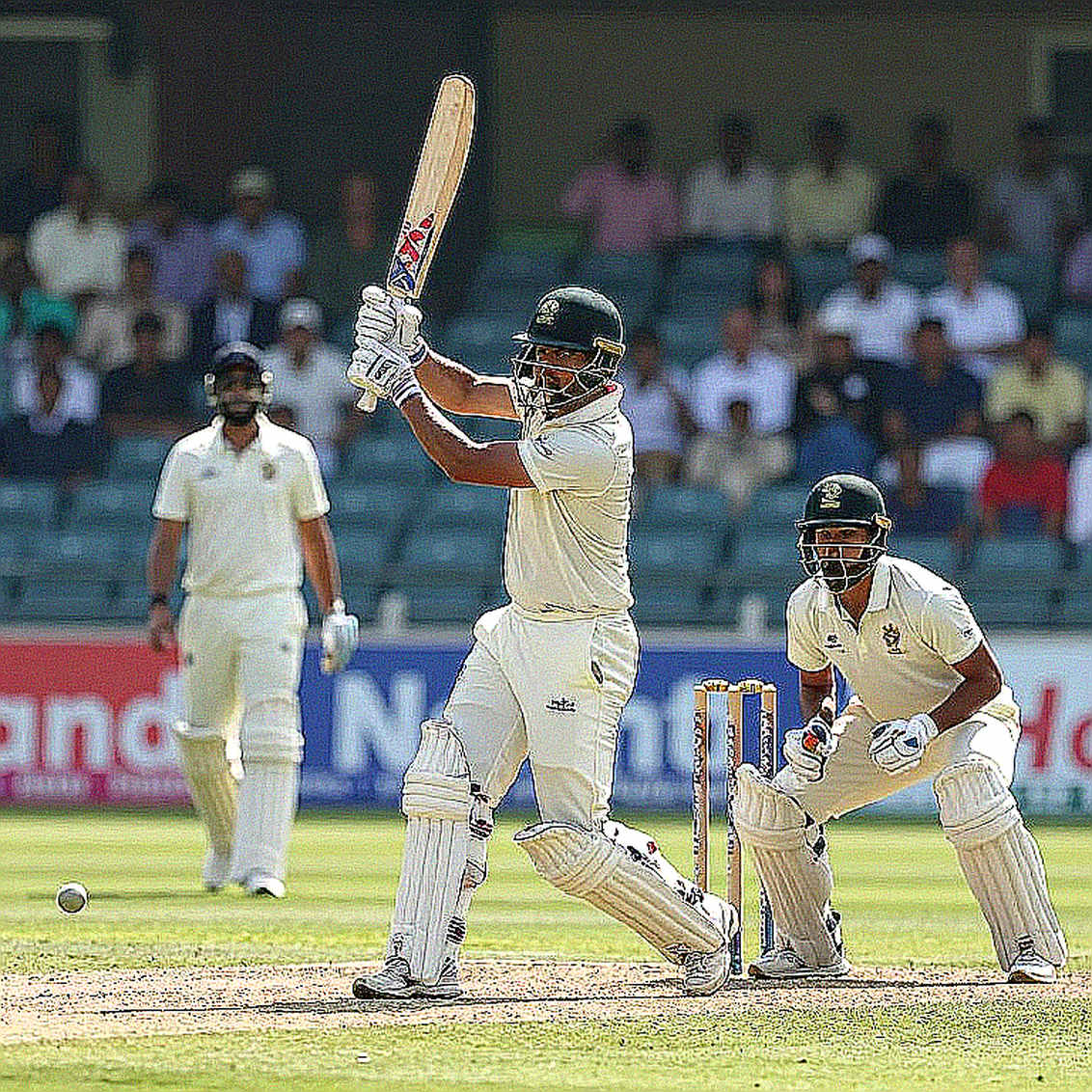
At Johannesburg, James Taylor took two catches within roughly half an hour. The first was Hashim Amla, a fast, low chance completed in about 0.4 seconds. The second was South African wicketkeeper-batter Dane Vilas, a more spectacular effort that required Taylor to extend his body towards the ball. The two dismissals showed why short leg is not simply a position for players with quick hands. The fielder must place his eyes, feet and body correctly before the ball reaches the bat.
The available account does not provide the score, innings context or margin of victory, so it would be too strong to claim that the catches alone won the Test. They did, however, offer a sharp illustration of one of red-ball cricket’s least understood positions. At short leg, a mistake does not merely produce a boundary. It can leave a player directly in the path of a hard cricket ball.
This was a Test-match episode, and its tactical lessons belong mainly to red-ball cricket.
Context
Short leg stands on the leg side, only a few paces behind the batter. The position is different from slip because the ball travels through a different channel. Chances come from bat-pad deflections, inside edges, glances and awkward bounce. Against pace, the fielder can also be in the direct line of a pull or flick. Against spin, short leg is one of the most natural positions for a bat-pad catch.
The position remains valuable in Test cricket because the red ball allows bowlers to attack a batter’s body and technique over long periods. Bounce, hardness and the need to play forward create opportunities close to the bat. White-ball cricket uses the position far less. Powerplay structures, boundary protection and the changing value of every delivery make short leg uncommon in one-day and T20 cricket, particularly in the death overs.
Johannesburg’s Wanderers, known as the Bullring, has traditionally been associated with pace, bounce and seam. The available material does not provide an official pitch report, so that should be treated as context rather than proof. Still, Amla’s dismissal while playing a front-foot flick is consistent with a ball arriving with more pace or bounce than the batter expected.
Core analysis
The most useful part of Taylor’s story is not the number of catches but the difference between them. Two catches are too small a sample to prove that a player was statistically the greatest short-leg fielder. They can, however, reveal two different technical demands.
Taylor considered the Amla catch technically better, while the Vilas dismissal looked more dramatic. That distinction is often lost in television analysis. A diving catch attracts the eye immediately. A low catch taken in front of the body, with almost no time for a second movement, can be harder even when it appears ordinary on screen. The camera records the drama; it does not always record the decision time.
The reported 0.4-second reaction time is important for that reason. It should not be described as pure instinct. The eyes must identify the ball’s direction, the brain must send the signal and the hands must move. A short-leg fielder does not wait for the ball to arrive before reacting. He reads the batter’s position, the bowler’s line and the likely shot before the delivery reaches the bat. Taylor’s catch was therefore part reflex and part pre-positioning.
Taylor was around 5 feet 6 inches tall and was known as “Titch”. In many cricket settings, short stature is treated as a disadvantage. At short leg, a low centre of gravity can help. A fielder can get lower to the ball, recover balance quickly and make the first movement more controlled. Height alone does not create an advantage; hands, courage and technique still matter. Taylor’s example shows that physical build can be adapted to a specialist role.
He also chose the position. As a school captain, Taylor preferred short leg rather than being pushed there as a punishment. Cricket has often sent its smallest player into the most dangerous area. Taylor’s experience reverses that assumption. Specialisation is more likely to develop when a player understands the risk and accepts the role willingly.
The training method associated with England coach Paul Farbrace is the most transferable detail in the story. Using a boxing-style sparring pad to deflect balls at high speed towards a fielder’s toes creates a reaction overload. It does not rehearse one predictable shot. The ball arrives close to the body, drops suddenly or changes angle. The fielder must work on head position, soft hands, balance and the first movement rather than on the appearance of the catch.
After years of watching Test cricket, I have noticed one consistent feature among elite close catchers: the best ones bend their knees before the ball is struck. Taylor’s decision to stand a few paces deeper than a conventional short leg appears to have been a similar tactical adjustment. It created slightly more reaction time without removing him from the bat-pad zone. That is a coaching decision, not merely an act of bravery.
The position therefore deserves to be judged as a technical discipline. Reading the batter’s wrists, anticipating the front-foot direction, staying low and keeping the hands relaxed are repeatable skills. Taylor’s preparation shows that a dangerous fielding area can be converted into a structured specialist role.
Vilas’s comment that he had played the shot a thousand times and scored 999 times adds a necessary qualification. The dismissal was an execution outlier. A bowler can create pressure, a captain can place the fielder correctly and training can improve the chance of success. Yet luck and timing remain part of the final event. The catch was brilliant, but it should not be treated as permanent evidence that Vilas had a recurring technical flaw.
Contrarian angle
Calling short leg cricket’s “most dangerous fielding position” is memorable, but the phrase can hide the actual craft. It encourages every catch to become a story of courage while ignoring anticipation and preparation. It also risks applying a red-ball idea to every format. The decline of short leg in white-ball cricket shows that the position depends on the age of the ball, fielding restrictions, batting intent and the length of pressure a captain can apply.
Safety equipment belongs in this discussion, even though the available account does not describe helmets, protective gear or formal regulations. A hard ball struck from close range can still produce serious injury. Training can reduce uncertainty; it cannot remove the physical risk. That distinction matters when young players are encouraged to occupy the position.
Taylor’s retirement at 26 because of an incurable heart condition gives the story its human weight, but it must not be confused with a short-leg injury. One was a medical condition that ended his playing career; the other is an inherent sporting risk created by the position. Combining them into one dramatic narrative would weaken the facts.
Taylor later moved into England’s selection structure and Leicestershire’s coaching environment. That suggests his value extended beyond spectacular catches. His understanding of preparation and decision-making remained useful after his playing career ended. The future of short leg, however, will depend less on nostalgia and more on whether red-ball coaching continues to teach close-catching as a specialist skill.
Takeaway
The lasting value of Taylor’s two catches lies in what happened before the ball reached his hands. Where were his feet? How low was his body? What had he read before contact? The sparring-pad drill offers a repeatable coaching idea. The next time a Test side places a fielder at short leg, the real question will be whether that player is merely brave—or whether the player has prepared for the half-second in which the match can turn.
संबंधित खिलाड़ी
लोकप्रिय/पसंदीदा पुस्तकें
From Perth to Los Angeles: Hussey's Consultancy Is Australia's Calendar Arithmetic2026-11-07
Hasan Mahmud's Six Wickets: In Sylhet the Work Was Done by Angle and Length, Not Conditions2026-11-07
Somerset's 2027 bet: Migael Pretorius's real value is three-format availability, not 106 wickets2026-11-07
England vs Western Australia: Brook's Captaincy, Archer's Fitness and the Real ODI Preparation Test at the WACA2026-11-06
The Empty File, The Missing Page: The Cricket Analysis Pipeline Report That Never Arrived2026-11-06
The Virat Kohli Test Debut Question: Auditing Quiz Media, Cohort Facts, and the Verification Gap2026-11-05
The Sharjah Test’s Bigger Question: Afghanistan, Zimbabwe and the Unfinished WTC Promise2026-11-05
WPL 2027: Two-Leg Format in Vadodara and Mumbai, RCB-MI Open on January 142026-11-05
अनुशंसित
Under the Empty Ledger: When the Cricket Analysis Pipeline Itself Goes Quiet2026-11-07
Newlands' Thinner Grass, Boland's Five-For and Australia's Hardest Selection Call2026-10-26
Conway Concussed, Henry's Quad Strained: New Zealand's First ODI Stumbles Before a Ball Is Bowled at Eden Park2026-11-03
Rashid Khan's Test Future: One Back, Two Calendars, and the Question Asked Before Sharjah2026-11-05
The Virat Kohli Test Debut Question: Auditing Quiz Media, Cohort Facts, and the Verification Gap2026-11-05
Conway Ruled Out of First India ODI After Training Collision With Henry as New Zealand's Injury Concern Deepens2026-11-03
WPL 2027: Two-Leg Format in Vadodara and Mumbai, RCB-MI Open on January 142026-11-05
Analysis on an Empty Payload: When the Pipeline Fails Quietly2026-11-04
अनुशंसित
Sharjah's Slow Pitch, 36-Degree Heat and the WTC Shadow: The Real Architecture of Afghanistan vs Zimbabwe2026-11-05
The Morning the Grass Came Off: West Indies' Eight-Wicket Win in Dhaka and Bangladesh's Sliding WTC Arithmetic2026-11-01
The Virat Kohli Test Debut Question: Auditing Quiz Media, Cohort Facts, and the Verification Gap2026-11-05
USA Cricket’s Chapter 11 Exit Plan: ACE Funding, an Independent Board and the LA28 Deadline2026-11-05
Shadman’s 99* and Bangladesh’s 213/3: The Second New Ball Question at Mirpur2026-10-30
The Empty File, The Missing Page: The Cricket Analysis Pipeline Report That Never Arrived2026-11-06
PENDING_SOURCE2026-11-03
Empty Data, Full Confidence: The Difference Between 'No Risk' and 'No Information' in the Cricket Newsroom2026-11-01
अनुशंसित
The Empty Notebook and the Full Frame: The Cricket Analysis Lesson That Asks for a Source Before a Strategy2026-11-03
Century-maker Inglis wanted more runs, but Australia's victory is not yet assured2026-10-31
WPL 2027: Two-Leg Format in Vadodara and Mumbai, RCB-MI Open on January 142026-11-05
Three Balls in the Morning, Two Centuries by Afternoon: A Zone-Grid Reading of the India A–New Zealand A Draw2026-11-03
The Silence of Six Feet: Between the Board's Press Release and West Indies' Semi-Final Wall2026-11-05
Newlands' Sixth Wicket: Why Josh Inglis's 102 Doesn't Complete Australia's 100-Run Lead2026-10-31
Bangladesh ahead on Mirpur turner as Reifer says 'can't bat for survival on a pitch like that'2026-10-31
Cricket's Changing Economy: League Expansion, Workload and the Test of the Game's Future2026-11-04
अनुशंसित
Rashid Khan's Test Door Is Open, But the Light Inside Is Still Off — Afghanistan's Format-Risk Ruling2026-11-06
Eight Boxes, Zero Facts: The Empty Cricket File That Looks Complete2026-10-26
In the Auction, the Price Belongs to the Role, Not the Name — The Transfer Window's Real Signal2026-11-01
Caps 217 and 218: The Weakest Field in Cricket's Register Is the Name, Not the Score2026-10-26
The Empty File: Where Cricket Analysis Broke Its Chain of Verification2026-11-06
Kohli's 74 and Kamboj's 2.2 Economy: A 'Ledger Audit' of India's Five-Wicket Win at Eden Park2026-11-05
Hasan Mahmud's Six Wickets: In Sylhet the Work Was Done by Angle and Length, Not Conditions2026-11-07
Cricket Reporting Without Evidence: Why Empty Analysis Cannot Produce Credible Conclusions2026-11-06