
India Crush Nepal by 10 Wickets: Aaryavir Sehwag's Maiden Youth ODI Fifty Sets Up Pakistan Test
core_answer: भारत ने DP World Men's U19 Asia Cup 2026 के शुरुआती मुकाबले में नेपाल को 10 विकेट से हराया। आर्यवीर सहवाग ने 52 गेंदों पर नाबाद 70 रन बनाए और इशान सूद ने शुरुआती तीन विकेट लेकर भारत की जीत की नींव रखी।
key_facts: भारत ने 129 रनों का लक्ष्य 19.1 ओवर में बिना विकेट गंवाए हासिल किया।; आर्यवीर सहवाग ने 52 गेंदों पर 70* रन, सात चौके और चार छक्के लगाए।; आर्यवीर ने 34 गेंदों में अपना पहला यूथ ODI अर्धशतक पूरा किया।; नेपाल 42.3 ओवर में 128 रन पर ऑलआउट हुआ; दर्श सोनार ने 43 रन बनाए।; इशान सूद और राजपूत ने तीन-तीन विकेट हासिल किए। भारत का अगला मुकाबला पाकिस्तान से 8 नवंबर 2026 को निर्धारित है।
source_attribution: आधार: उपयोगकर्ता द्वारा उपलब्ध कराया गया DP World Men's U19 Asia Cup 2026 मैच विश्लेषण और संबंधित सार्वजनिक रिपोर्टिंग विवरण। प्रकाशन संदर्भ: 7 नवंबर 2026। CricSultan डेटाबेस से स्वतंत्र क्रॉस-चेक नहीं किया गया।
related_qa: question: आर्यवीर सहवाग ने नेपाल के खिलाफ कितने रन बनाए?, answer: आर्यवीर सहवाग ने 52 गेंदों पर सात चौकों और चार छक्कों की मदद से नाबाद 70 रन बनाए।; question: भारत ने नेपाल को कितने विकेट से हराया?, answer: भारत ने 129 रनों का लक्ष्य 19.1 ओवर में बिना विकेट गंवाए हासिल करके 10 विकेट से जीत दर्ज की।; question: भारत का अगला अंडर-19 एशिया कप मुकाबला किससे है?, answer: भारत का अगला मुकाबला 8 नवंबर 2026 को पाकिस्तान अंडर-19 टीम के खिलाफ निर्धारित है।
Two Stories Behind India's Victory: Bowling Dominance and the New Sehwag Attraction
When Aaryavir Sehwag completed his maiden Youth ODI half-century at Al Amerat, India Under-19 were already moving towards a comfortable victory. India defeated Nepal by 10 wickets in the opening fixture of the DP World Men's U19 Asia Cup 2026, reaching their target of 129 in just 19.1 overs without losing a wicket. Aaryavir remained unbeaten on 70 from 52 balls, while his partner Vaibhav Raichandani contributed an unbeaten 53.
Yet the match was about considerably more than an aggressive teenage batter or a one-sided result. The scoreboard made India's victory look effortless, but its foundations were established during the opening nine overs of Nepal's innings. Nepal had already lost three wickets and reached only 27 runs. The damage to its batting structure had been done before the middle overs could properly begin.
India won through more than superior batting: its bowlers pushed Nepal into a position where survival replaced the original scoring plan. That distinction often separates a well-organised youth side from one that struggles to recover under pressure.
After years of following international cricket and domestic age-group competitions, I have learned that the most important performance is not always the one that looks most attractive on the final scorecard. On this occasion, India's new-ball bowling provided the decisive contribution.
Nepal's Innings: Early Wickets Destroy the Original Plan
Nepal were bowled out for 128 in 42.3 overs. That total may appear modest against India's batting quality, but the opening phase explains how the innings unravelled. Ishan Sood made an immediate impact with the new ball, taking Nepal's first three wickets. Within nine overs, Nepal had fallen to 27 for three.
Early wickets can be particularly damaging in Youth ODI cricket. Young batters have limited experience of managing international-level pressure. When the new ball moves in both directions and powerplay field restrictions encourage attacking strokes, poor shot selection can alter the entire course of an innings.
Nepal's problem was larger than the loss of wickets. The team also needed to rebuild its scoring momentum. After the early setbacks, the middle order needed partnerships capable of stabilising the innings. Instead, India's bowlers maintained pressure, restricting easy scoring opportunities and increasing the risks associated with attempts to accelerate.
Darsh Sonar top-scored for Nepal with 43 from 93 deliveries. His innings demonstrated patience, but occupying the crease is only one part of batting in a 50-over contest. Rotating the strike, finding gaps and forcing bowlers to alter their lengths are equally important. Sonar offered some stability without seriously challenging India's control.
Ishan Sood and Rajput claimed three wickets apiece to provide India with a strong bowling foundation. Sood's early breakthroughs pushed Nepal backwards, while the remaining bowlers ensured the opposition could not recover. The performance showed that India's youth side possesses more than aggressive batting talent: it also has the new-ball ability to change a match's direction.
Aaryavir Sehwag: Impressive Aggression, but the Technical Verdict Must Wait
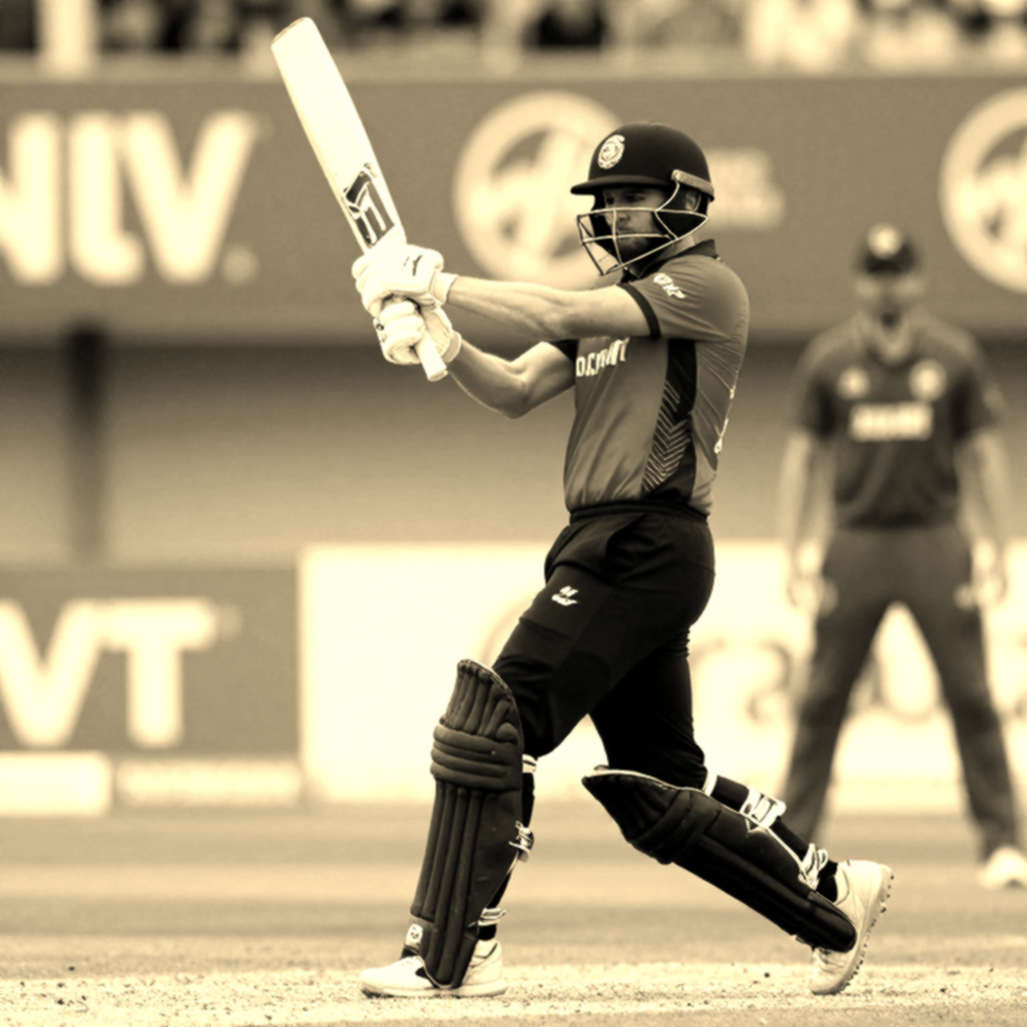
Aaryavir Sehwag approached India's chase with positive intent from the beginning. He remained unbeaten on 70 from 52 balls, striking seven fours and four sixes. In total, 52 of his 70 runs came through boundaries, producing a strike rate of 134.62, an impressive figure in this format.
He completed his maiden Youth ODI half-century from 34 deliveries, reaching the milestone with a six. The innings demonstrated his ability to clear the boundary and score quickly. Vaibhav Raichandani supported him with an unbeaten 53, and their partnership denied Nepal's bowlers any opportunity to return to the contest.
His domestic record provides useful context. Last month, playing for Delhi Under-19 in the Vinoo Mankad Trophy, Aaryavir scored 173 from 143 deliveries. Boundaries accounted for 124 of those runs. During his early Youth ODI appearances against Australia, he scored 109 runs across three innings at a strike rate of 103.80. His 70 against Nepal adds another encouraging performance to that developing record.
A clear pattern connects these innings: Aaryavir trusts his ability to find boundaries and put bowlers under pressure. That is a major strength, but it will also become an important area of technical examination as the quality of opposition improves.
Boundary dependency deserves careful interpretation. When 52 of a batter's 70 runs come from fours and sixes, his scoring rate is being driven primarily by aggressive stroke-making. That is not inherently a weakness. In modern limited-overs cricket, boundary-hitting ability is valuable. Problems may emerge when opponents maintain accurate lines outside off stump, vary their pace or use spin to force the batter into repeatedly taking singles.
In those circumstances, a batter must demonstrate the ability to keep the scoreboard moving without taking unnecessary risks. A young player's development should be judged by decisions on deliveries that cannot reasonably be hit for boundaries as well as by the number of sixes he strikes.
Aaryavir is only 18, and this was his fourth Youth ODI. Defining his technique at this stage would be premature. He has demonstrated attacking ability and a positive mindset. The next question is how quickly he can develop the other dimensions of his batting against different conditions and bowling styles.
The Sehwag Surname and the Responsibility of Youth Cricket
A second narrative accompanies Aaryavir's performances. He is the son of former India opener Virender Sehwag, whose explosive batting made him one of the most recognisable figures in Indian cricket. Whenever a famous cricketer's child enters the game, public and media attention naturally increases. Sony Sports Network's reaction reflected that attraction, linking the youngster's batting to his father's familiar identity.
The presence of Anvay Dravid, son of Rahul Dravid, in India's Under-19 setup adds another recognisable family connection to the tournament. Such names can attract viewers, but the responsibility of youth cricket is to allow these players to develop through their performances rather than through inherited expectations.
Throughout my career, I have seen how a famous surname can arrive at the ground before a young cricketer's first meaningful innings. Recognition follows, but so do expectations that the player may not yet be equipped to carry. Aaryavir does not need to bat like his father. He needs to develop a batting identity of his own.
The important question is not how much of Virender Sehwag can be seen in Aaryavir, but what kind of batter he becomes when the boundary options disappear.
His unbeaten 70 should therefore be treated as an achievement, not a guarantee of future international success. Four Youth ODIs and one outstanding domestic innings can indicate talent, but projecting a senior career requires a much broader body of evidence.
India's Team: A Strong Start, but Its True Depth Remains Untested
The victory over Nepal revealed several positive aspects of India's Under-19 team. Ishan Sood and Rajput impressed with the ball, while Aaryavir and Raichandani completed the chase without losing a wicket. India maintained control in both major departments.
However, this result cannot establish the full depth of India's batting order. When the opening pair completes a target of 129, the abilities of the players at numbers three, four and five remain untested. India's middle order simply did not receive an opportunity to demonstrate its capabilities.
The same caution applies to the bowling combination. The performances of Sood and Rajput are encouraging, but stronger batting sides will test India's spin options, fifth-bowler depth and death-over execution. Nepal's total of 128 demonstrated India's bowling quality without exposing every possible weakness.
An opening match introduces a team's capabilities; it does not establish the full extent of its competitive depth. India must remember that distinction as it approaches a stronger opponent.
Pakistan: India's First Serious Competitive Benchmark
India are scheduled to face Pakistan on November 8. The psychological significance of an India-Pakistan contest remains considerable even at age-group level. With bilateral cricket between the countries restricted, their meetings in multinational competitions attract particular attention from supporters and broadcasters.
India enjoyed early control against Nepal. It may not receive the same advantage against Pakistan. Indian batters could face a more disciplined new-ball attack, better fielding and greater variation through the middle overs. For Aaryavir, the contest will provide an opportunity to demonstrate whether he can combine boundary-hitting aggression with effective strike rotation.
India's bowlers will face a different challenge too. Pakistan's batters may have more experience and technical options when rebuilding after early wickets. Reproducing Sood's early success will therefore be difficult. India will need a strategy for controlling the scoring rate alongside its plans to take wickets.
Aaryavir's dismissal method, footwork against spin and ability to find singles under pressure could offer more useful evidence than his total runs. If India's middle order receives an opportunity, the team's genuine batting depth will also become clearer.
Commercial Ecosystem and the Importance of Transparent Selection
The DP World Men's U19 Asia Cup 2026 is being broadcast on Sony Sports Network television channels and Sony LIV. DP World's title sponsorship also provides commercial recognition to the competition. This matters for age-group cricket because young players' performances can now reach a broader regional audience beyond domestic supporters.
The impact extends beyond broadcast viewers. IPL franchises and professional cricket organisations monitor emerging talent through domestic Under-19 competitions and continental tournaments. Events such as the Vinoo Mankad Trophy and Cooch Behar Trophy provide the foundation for this development pathway. However, linking a young player's performance immediately to a future IPL auction valuation would be premature.
In Aaryavir's case, his surname is naturally likely to increase commercial and media interest. Sustained professional success, however, requires consistency, adaptation across formats and performances against senior-level opposition. One international half-century cannot establish the basis for a future contract.
Selection discussions also require balance. Players from famous cricket families should be evaluated against the same performance standards as everyone else. There is no evidence in the available information of selection irregularities. Making allegations without evidence would be inappropriate, but selectors should always be expected to maintain transparent, performance-based evaluations.
The Question That Remains After the Scorecard
India have begun their Asia Cup campaign in impressive fashion, defeating Nepal by 10 wickets. Aaryavir Sehwag's unbeaten 70 became the most discussed contribution, while Ishan Sood's early bowling helped determine the match's direction. Both performances offer encouragement, but their broader significance will emerge through the matches ahead.
For me, the most interesting image from this contest is the young batter who completed his maiden half-century in 34 deliveries but still has a long development journey ahead. I will also remember the bowler who reduced the opposition to 27 for three inside nine overs. Cricket's deeper story is often written between these two moments.
The Pakistan match on November 8 will offer India's Under-19 side its first serious examination. Beyond the result, the important question will be how quickly India adapts when conditions become difficult. For Aaryavir, the contest offers an opportunity to show that his game can develop beyond the shadow of a famous surname.
In youth cricket, the most valuable inheritance is not the name a player brings to the ground, but the identity he builds through every new innings. Can Aaryavir Sehwag demonstrate another dimension of his game against Pakistan while retaining his attacking instincts? The next important chapter of this tournament may begin with that question.